
NEW TECHNOLOGY WITH ONE GOAL IN MIND:
Get Results 2x Faster, Supercharge Your Body & Mind
Take a deep breath now and find out how our advanced technology supercharges your body
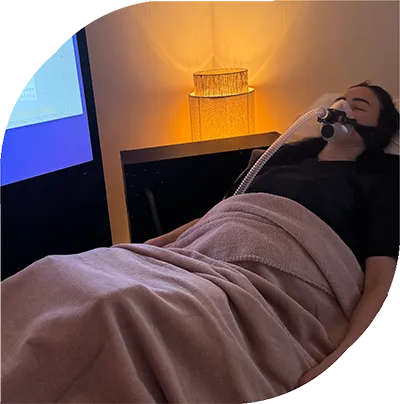
our 4 Membrane Air Regulation SYSTEM BUILD TO
Maximized Stimulus During Training
Greater Mitochondrial Training
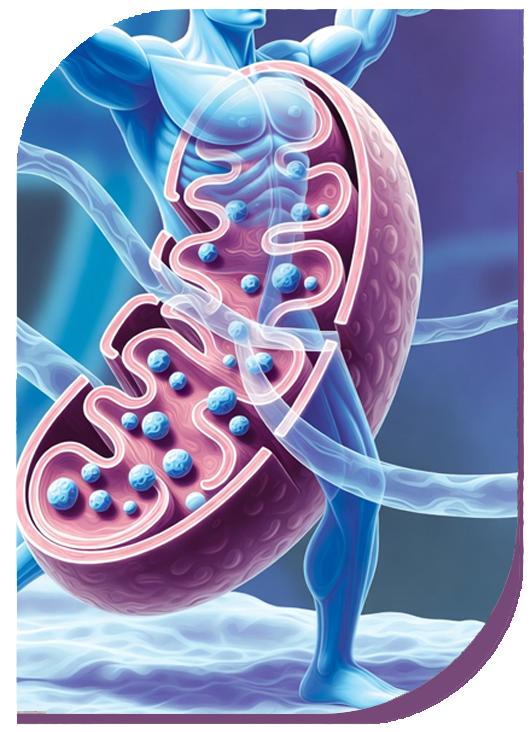
Maximized Mitochondria Repair
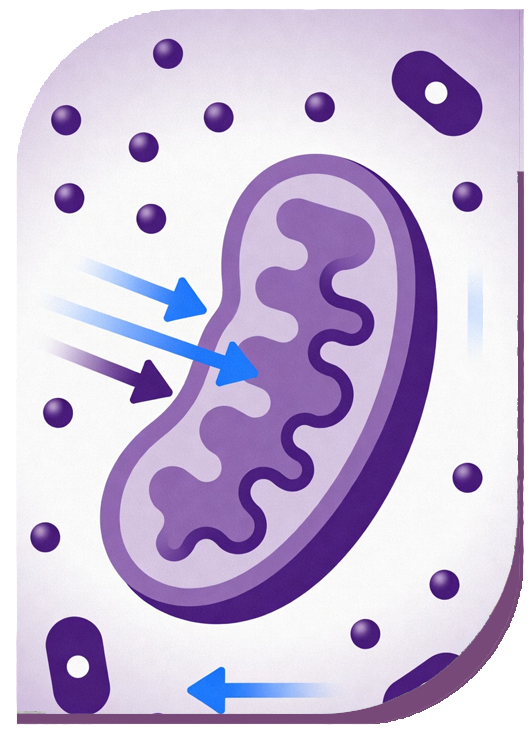
More Effecitve Breathing
Faster
Results

Our Specialties
Why Choose Us
Being a long-standing innovator we are highly motivated giving the best customer support and trianings

Full Range Oxygen Control
7,5-15% O2, normoxia and high oxygen
Entertainment Screen
Visualize the session for the client
Advanced Data measurement
O2, CO2, SPo2, H20, Pulse and breath measurement
Control from Everywhere
Cloud based control system
Integrated CO2 and H2O optimization
with different levels of configuration
Highest Quality standards
i.e. 6 air filters, oilfree valves, stainless stell fittings - build to last

With the help of IHHT2 we could see great breakthtoughs for our clients in many different areas, including weight loss, hormone regulation and sleep improvments. As a benefit for us we could increase our revenue by combining IHHT and Body Stimulation. - Raphaela Seefeldt, relaxandloseweight
Join our rollout in 2026: Studios, Distributors, Clients and Investors - save your slot and lets talk:
What is IHHT?
IHHT (Interval Hypoxic-Hyperoxic Training) simulates high-altitude training while you are in a relaxed state. You breathe through a mask, alternating between oxygen-poor air (Hypoxia – simulating mountain altitudes) and oxygen-rich air (Hyperoxia). This process triggers a cellular stimulus that encourages the regeneration of mitochondria, the "powerhouses" of your cells.
✔️ Simulates altitude training without physical exertion
✔️ Performed in a relaxed sitting or lying position
✔️ Individually adjustable protocols
✔️ Controlled and repeatable oxygen exposure
✔️ No need to travel to high altitudes
Who is IHHT suitable for?
IHHT regenerates mitochondria — the cell's power plants producing ~90% of your energy (ATP). As Chris Masterjohn, PhD (mitochondrial expert & Mitome founder) explains, mitochondria drive everything: daily energy, metabolism, mood, hormones, immunity, sleep, performance, resilience, and aging itself. Declining function (starting ~1% per year after age 18) fuels fatigue, anxiety, poor recovery, and accelerated aging—while optimizing them unlocks vitality and longevity.
IHHT stresses weak mitochondria (via hypoxia) and aids renewal (via hyperoxia), boosting efficiency without hard exercise.
IHHT appeals to individuals with goals related to:
Longevity & anti-aging — Slows decline, boosts resilience, extends healthspan.
Peak performance — Athletes/biohackers: +VO₂max, endurance, faster recovery, fat burning, focus/motivation.
Metabolism boost — Better energy from food, weight control, blood sugar stability.
Recovery support — Long COVID (improved capacity, less fatigue), chronic fatigue, post-viral rehab.
Seniors/low mobility — Passive method to fight age-related energy drop and maintain independence.
Everyday wellness — Low energy, stress, poor sleep, preventive health.
How does an IHHT session work?
During an IHHT session, the user sits or lies down comfortably and breathes through a mask connected to an IHHT device.
The device automatically switches between hypoxic and hyperoxic phases while monitoring key parameters such as oxygen saturation and heart rate.
How long does an IHHT session last?
A typical IHHT session lasts approximately 30–50 minutes, depending on the protocol and individual settings.
How often is IHHT performed?
Providers commonly recommend 2–3 sessions per week over several weeks, depending on goals, physical condition, and professional guidance.
Whats the technical difference IHHT2 vs IHHT
- IHHT2 uses up to 4 membranes to re-balance O2, CO2 and H20 .
- IHHT devices commonly use one main membrane to split the air in two outputs, one for high oxygen and one for low oxygen.
Imagine it like a sieve letting the faster and smaller oxygen molecules going in one direction to concentrate them but also concentrates CO2 and H2O on one side while washing it out on the other side. This leads to a very imbalanced and counterproductive output.
While some machine try to re-balance at least the humidity on low oxygen partially, we measured the following concentrations on the air to the mask:
CO2 Concentration <50ppm on Low O2 and CO2 Concentration >1800ppm on high O2 - while regular air in the room had 690ppm, and
humidity concentration >99% on High O2 output.
Why does IHHT2 do Greater Mitochondrial Training
CO₂ regulation matters in IHHT because carbon dioxide is not merely a waste product of metabolism but a central physiological regulator. It plays a key role in controlling breathing, regulating blood flow, enabling effective oxygen delivery to tissues, and maintaining acid–base balance. Focusing on oxygen levels alone, without considering CO₂, can therefore lead to counterproductive outcomes.
When CO₂ levels drop to extremely low values (for example around 50 ppm), especially in combination with low oxygen levels, several adverse effects occur. The respiratory drive is reduced because CO₂ is the primary stimulus for breathing. At the same time, low CO₂ impairs oxygen release from hemoglobin (the Bohr effect), meaning that oxygen remains bound in the blood and does not reach the cells efficiently, even if oxygen is being inhaled.
In addition, low CO₂ causes vasoconstriction, leading to reduced blood flow, particularly in the brain and muscles. This can result in dizziness, reduced cognitive performance, and overall discomfort. The drop in CO₂ also disrupts the acid–base balance, causing respiratory alkalosis, which may lead to neuromuscular irritability, tingling sensations, and restlessness. Cerebral blood flow decreases, further impairing concentration and increasing the risk of lightheadedness or fainting.
In the context of IHHT, the combination of low oxygen and excessively low CO₂ creates physiological stress without promoting effective adaptation. Instead of supporting beneficial hypoxic signaling and mitochondrial adaptation, such conditions can blunt or negate the intended training effect.
In summary, effective IHHT requires more than oxygen modulation alone. Adequate CO₂ regulation is essential for safe, efficient oxygen utilization and meaningful physiological adaptation.
Why does IHHT2 do Greater Mitochondria Repair
1) Avoiding 100% humidity: why fully saturated air is detrimental
Air at 100% relative humidity is fully saturated with water vapor. Under these conditions, water vapor displaces other gases, including oxygen, and interferes with efficient gas exchange in the lungs.
From a physiological perspective, excessive humidity:
Reduces effective oxygen partial pressure in the alveoli
Impairs diffusion of oxygen into the blood
Alters measurement accuracy and control of oxygen delivery
Adds unnecessary respiratory stress without increasing hypoxic signaling
For mitochondria, this means less precise and less effective hypoxic stimulus. Instead of a clean, well-controlled oxygen challenge that triggers mitochondrial repair and biogenesis, the body experiences a blurred signal caused by impaired gas exchange. IHHT² avoids this by maintaining controlled humidity, allowing hypoxia to act as a clear, targeted signal to mitochondria.
2) Avoiding excessively high CO₂ levels: protecting oxygen utilization
While CO₂ is essential for respiration and oxygen delivery, too much CO₂ becomes counterproductive. Elevated CO₂ levels can push the body toward respiratory acidosis, excessive vasodilation, and dysregulated breathing patterns.
Excessive CO₂ during hypoxic exposure:
Overstimulates the respiratory system
Shifts pH outside the optimal range for mitochondrial enzymes
Distorts the hypoxic signal by adding acid–base stress
Forces the body into compensation rather than adaptation
Mitochondrial repair and renewal depend on a balanced stress signal: enough hypoxia to activate pathways such as mitochondrial quality control and turnover, but not so much CO₂ that the system prioritizes pH correction and respiratory compensation. IHHT² keeps CO₂ within a physiological range, ensuring that hypoxia drives mitochondrial repair rather than systemic stress responses.

© Copyright 12M Invent GmbH, Bahnofstr 5, 91245 Simmelsdorf.